

By Kirsty Castle MRTPI AIEMA and Harriet Richardson MRTPI
Recent government tax changes are creating additional financial pressures for independent schools. The removal of the VAT exemption on fees and changes to business rates relief are part of this. As a result, governors and bursars across the South East are rethinking income, assets and long-term sustainability. For many schools, the estate is an important part of that conversation. That might mean investing in facilities to support the school’s offer, diversifying the use of buildings and land, or reviewing assets that no longer support the school’s longer-term objectives.
Each of these decisions can have a planning dimension, from whether independent school planning permission is needed to how a site’s history affects what is possible. However, the planning environment for independent schools is often more nuanced than it first appears. As a result, understanding the relevant considerations early can help schools explore their options with greater confidence.
Supporting a Strong School Offer
The breadth and quality of facilities play an important role in how prospective families judge a school. Sports halls, all-weather pitches, sixth form centres, science and technology blocks, performing arts spaces and modern boarding accommodation all contribute to a school’s offer. Therefore, considered investment in the estate can help schools respond to changing expectations, while staying true to their own educational priorities and character.
However, this creates a careful balance at a time when many schools are also managing increased financial pressure. Early planning input can help establish what is achievable and identify the issues likely to shape a proposal. In addition, it can inform decisions before the school commits significant time and money to design and delivery.
Why School Sites Are Complex Planning Environments
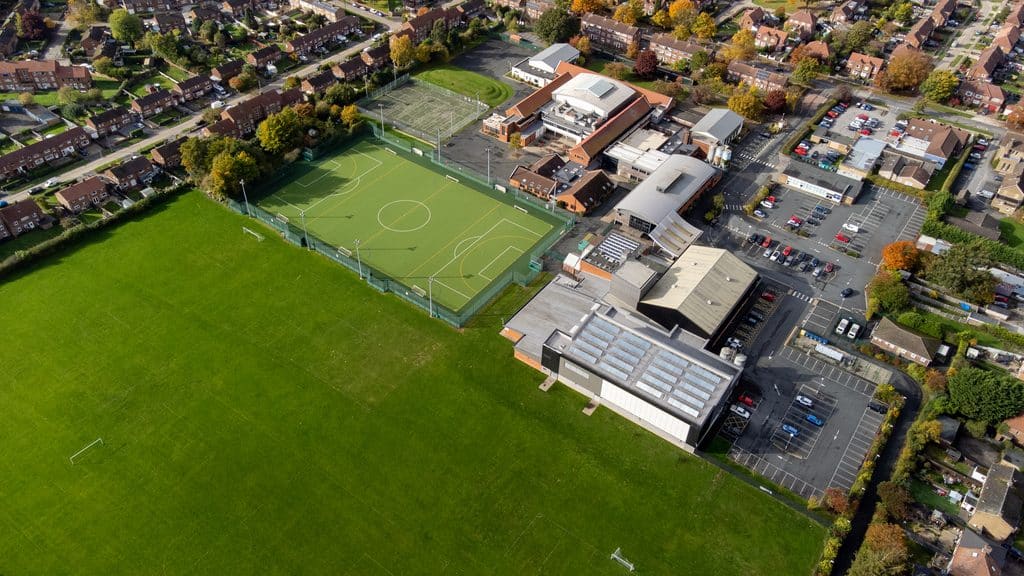
Independent school campuses are rarely simple sites, and they often have a rich and varied planning history. Councils may have granted consents in different policy eras and under different legislation. In many cases, those consents carry conditions that restrict how the school can operate. There may also be historic uses or development that would benefit from clarification. Considering any new proposal alongside this wider history can therefore help identify opportunities and constraints early.
Schools also benefit from their own set of permitted development rights. In many cases, these allow schools to extend or alter buildings, or add new accommodation, without express planning permission. However, the rights come with clear limits, so understanding them is key to making the most of this simpler route to consent.
Listed Buildings, Green Belt and Neighbours
Many independent schools also occupy listed buildings of significant historic and architectural merit. Extensions, alterations and some internal works to listed buildings may need listed building consent as well as planning permission. Heritage impact is not a box to tick late in a design process. Instead, it needs to be part of the thinking from the start. Councils assess the design of works to listed buildings more rigorously. In addition, the consequences of starting works without the necessary listed building consent can be serious. Understanding a building’s heritage significance helps proposals respond positively to it, while still meeting the school’s needs.
Green Belt and National Landscape designations affect a large number of independent school sites across Kent, Sussex and Surrey. National planning policy sets strict tests for development in the Green Belt in particular. However, there is a recognised route for development on established school campuses, where the school genuinely needs the facilities. That route requires a carefully evidenced case. It is not straightforward, but it is available, and schools have used it successfully.
Relationships with neighbours and the wider community are another important consideration. For example, sports facilities can raise questions about noise, while new buildings may prompt concern about scale, visual impact or traffic. Schools can anticipate and address many of these matters through carefully prepared technical evidence and early dialogue with the local planning authority. Because each authority approaches these issues differently, knowing how they work in practice is invaluable.
Exploring Diversification Opportunities
For some schools, the estate may hold untapped opportunities to support wider strategic or financial goals. Buildings used mainly in term time, surplus farmland, redundant outbuildings, paddocks or car parks may have potential for other uses.
Examples include letting sports facilities commercially, using historic buildings for conferences and events, converting outbuildings into holiday accommodation, or putting surplus land forward for residential or mixed development. The right planning route depends on the proposal. However, most will need a formal application or longer-term promotion through the local plan process.
Biodiversity Net Gain (BNG) obligations now apply to most major development, so they are a further consideration for many campus improvement or diversification schemes. Exploring BNG requirements early can help identify suitable solutions. As a result, it reduces the risk of redesign or delay later in the application process.

The Value of Early Planning Input
On institutional sites, the hardest planning issues often arise when key points surface late in the process. For example, a design may progress before anyone has fully explored the planning route. Heritage matters may emerge during determination, or conditions on historic consents may only come to light as a proposal develops. Each of these can cause unnecessary cost and delay. To avoid them, bringing the relevant disciplines together earlier helps a project team understand the issues and respond in a coordinated way.
Early review cannot remove every planning risk. However, it can reduce uncertainty, inform realistic project programmes and create more scope to adapt a proposal before the school commits significant resources.
In short, good planning can help independent schools turn change into opportunity. By understanding what is possible across their estate, schools can make informed decisions about investment, diversification and future development. At a time of financial pressure and change, a well-considered planning approach can unlock potential and support wider ambitions.
Batcheller Monkhouse Planning & Development works with clients on planning applications, feasibility appraisals, heritage and listed building matters, diversification schemes, strategic land promotion and Biodiversity Net Gain across Sussex, Kent and Surrey. Read more in our guide to planning reform in 2026, or see our school development case study.
East Sussex, Kent and London: Kirsty Castle MRTPI AIEMA | k.castle@batchellermonkhouse.com | 01892 509280
West Sussex and Surrey: Clare Bartlett MRTPI PISEP | c.bartlett@batchellermonkhouse.com | 01798 877555
Planning ahead for your school estate?
An early review of your site’s planning history and constraints can save time and cost before any design work begins.